BooksCloud
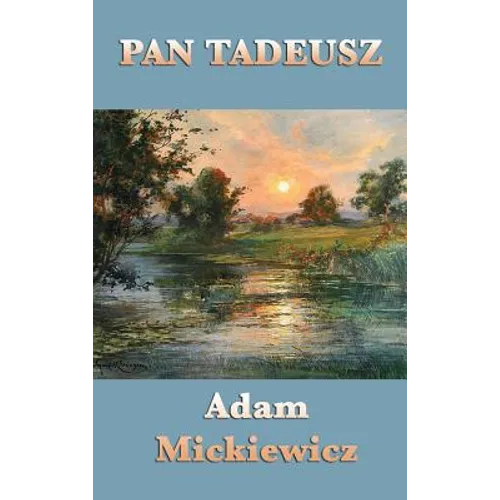
Pan Tadeusz: An Epic Poem of Polish Life, Tradition, and History - Hardcover
Pan Tadeusz: An Epic Poem of Polish Life, Tradition, and History - Hardcover
Couldn't load pickup availability
Selling fast — don’t wait.
by Adam Mickiewicz (Author)
A central work of Polish literature, Pan Tadeusz presents a poetic narrative of life, conflict, and tradition in the final years of the Polish-Lithuanian Commonwealth.
Written as an epic poem, the work is set in the early nineteenth century and follows the intertwined lives of noble families in the Lithuanian countryside. Through its narrative of feuds, reconciliation, and shifting loyalties, the poem captures a society shaped by custom, land, and memory. The setting, situated on the eve of political change, gives the work both a reflective and historical dimension.
Mickiewicz combines detailed description with a broader cultural perspective, presenting landscapes, social rituals, and daily life alongside larger questions of identity and national continuity. The poem's structure allows for both narrative development and digression, creating a work that moves between personal story and collective experience. Its language and form have made it a defining text within Polish literature, widely read for both its literary qualities and its cultural significance.
Author Biography
Adam Mickiewicz (1798 - 1855) was a Polish poet, dramatist, essayist, activist, and professor. He is regarded as a national poet in Poland, Lithuania, and Belarus. Born into Russian-occupied Lithuania, Mickiewicz was active in the struggle to win independence. He lived most of his life in exile in western Europe where he wrote freely of the occupation and taught Slavic literature. He died in Constantinople, where he had gone to help organize forces to fight against the Russians in the Crimean War.
About the translator: Bill Johnston is a professor of Comparative Literature at Indiana University. His translations include Witold Gombrowicz's Bacacay; Magdalena Tulli's Dreams and Stones, Moving Parts, Flaw, and In Red; Jerzy Pilch's His Current Woman and The Mighty Angel; Stefan Żeromski's The Faithful River; and Fado and Dukla by Andrzej Stasiuk. In 1999 he received a National Endowment for the Arts Poetry Fellowship for Translation. In 2008 he won the inaugural Found in Translation Award for Tadeusz Rozewicz's new poems, and in 2012 he was awarded the PEN Translation Prize and Three Percent's Best Translated Book Award for Myśliwski's Stone Upon Stone.
Share